A Phuket visa run worth taking: a week in Kuala Lumpur and Bali
Since 15 September 2026, Thailand's visa-free stay is 30 days, not 60. If you're staying longer, you'll have to leave at some point. Most people do it as a rushed round trip. We'd rather you came back with two more countries behind you: Kuala Lumpur, then Bali, then Phuket again, with one person to talk to from the first message to the flight home.
Why the 30-day rule changes the maths
Two months in Phuket used to need nothing more than a passport stamp. Now it needs an exit. That exit isn't optional, so it may as well be worth it.
You have two legitimate ways to stay beyond 30 days. You can extend once at a Thai immigration office, for an official fee and subject to approval, which takes you to 60 days in total. If you simply want to stay put in Phuket, that's cheaper than any trip, and it's often the right choice.
Or you can leave and come back. By air there's no annual limit, and coming back opens a new 30-day exemption. That's the option that makes sense if you want to see something else, or need more than 60 days overall. Most visa runs are a same-day hop: a border, a queue, a stamp, and a day and a bit of money gone for nothing.
This circuit takes the same obligation and turns it into a week you'll talk about. Phuket is a short flight from whole other countries; what's missing isn't the connection, it's the time to piece it all together from a sun lounger. So we've pieced it together.
How the week works
Phuket at both ends, two stops in the middle, in an order designed to keep flights short and days full.
Six days, or seven if you want an extra day somewhere (Bali is where it helps most, because distances there are longest). A first stop in and around Kuala Lumpur, a second in Bali, then back to Phuket. The flights between stops, the accommodation, breakfasts and the activities on the route are organised beforehand. You travel with a written plan, not a list of things to work out on the way.
And one thing that matters more than everything else combined: there's someone you can reach throughout. A flight that slips, a change of plan for the afternoon, a question the hotel reception can't answer. You're never on your own.
To be straight about the trade-off: you pack and unpack, take regional flights and change beds. It isn't a lie-in week, and someone after seven days in a hammock should pick a villa with a pool instead.
Kuala Lumpur and around
About two hours' flight from Phuket. The city is best seen from above, but what you bring home is mostly on its edges and in its streets after dark.
The pink mosque of Putrajaya
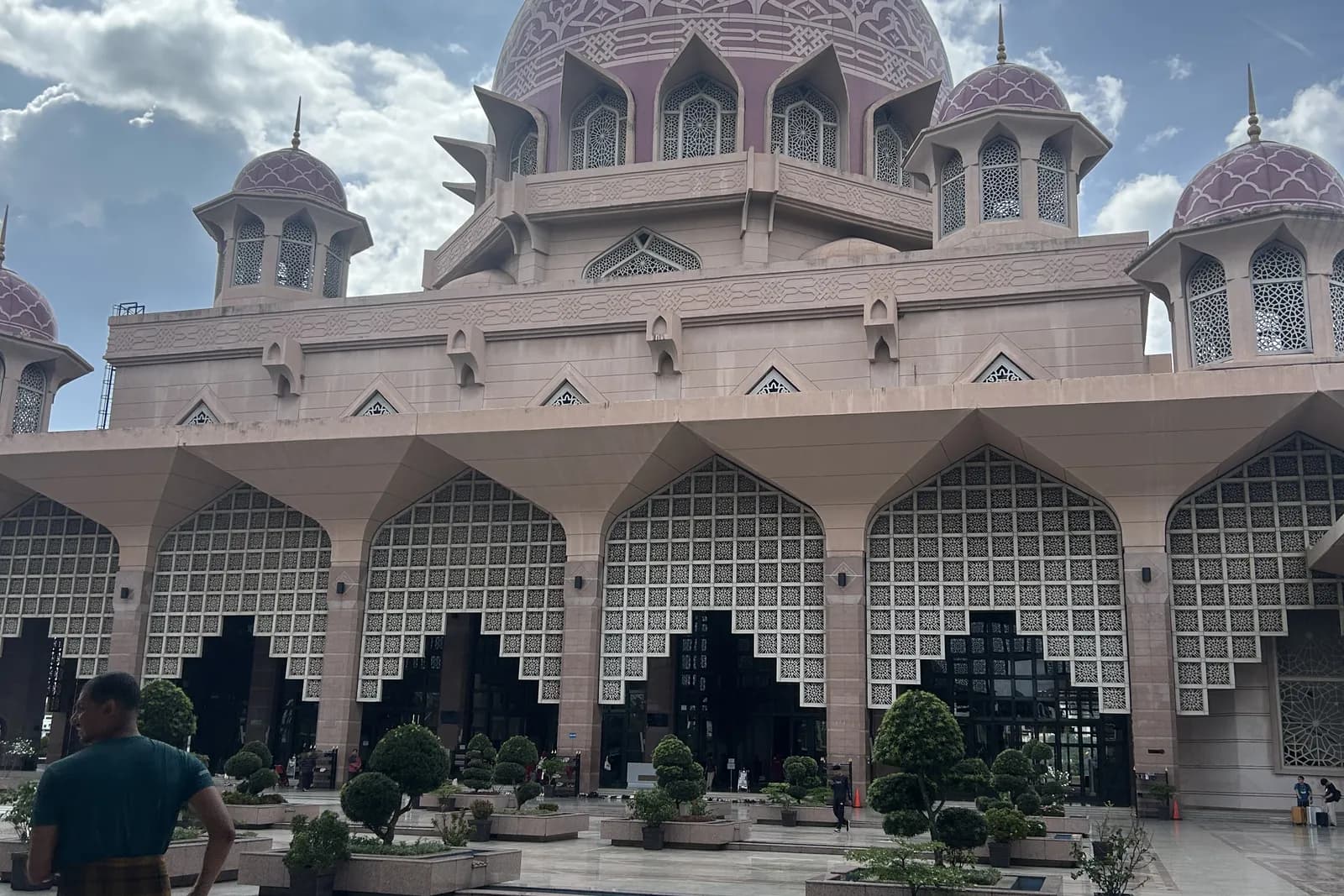
South of the capital, in the administrative city built beside an artificial lake. The pink stone changes tone through the day, and the dome reflects in the water when there's no wind. It's the best photo stop of the route, and almost everyone comes back with the same picture. Covered clothing is required, and robes are lent to visitors at the entrance.
Batu Caves
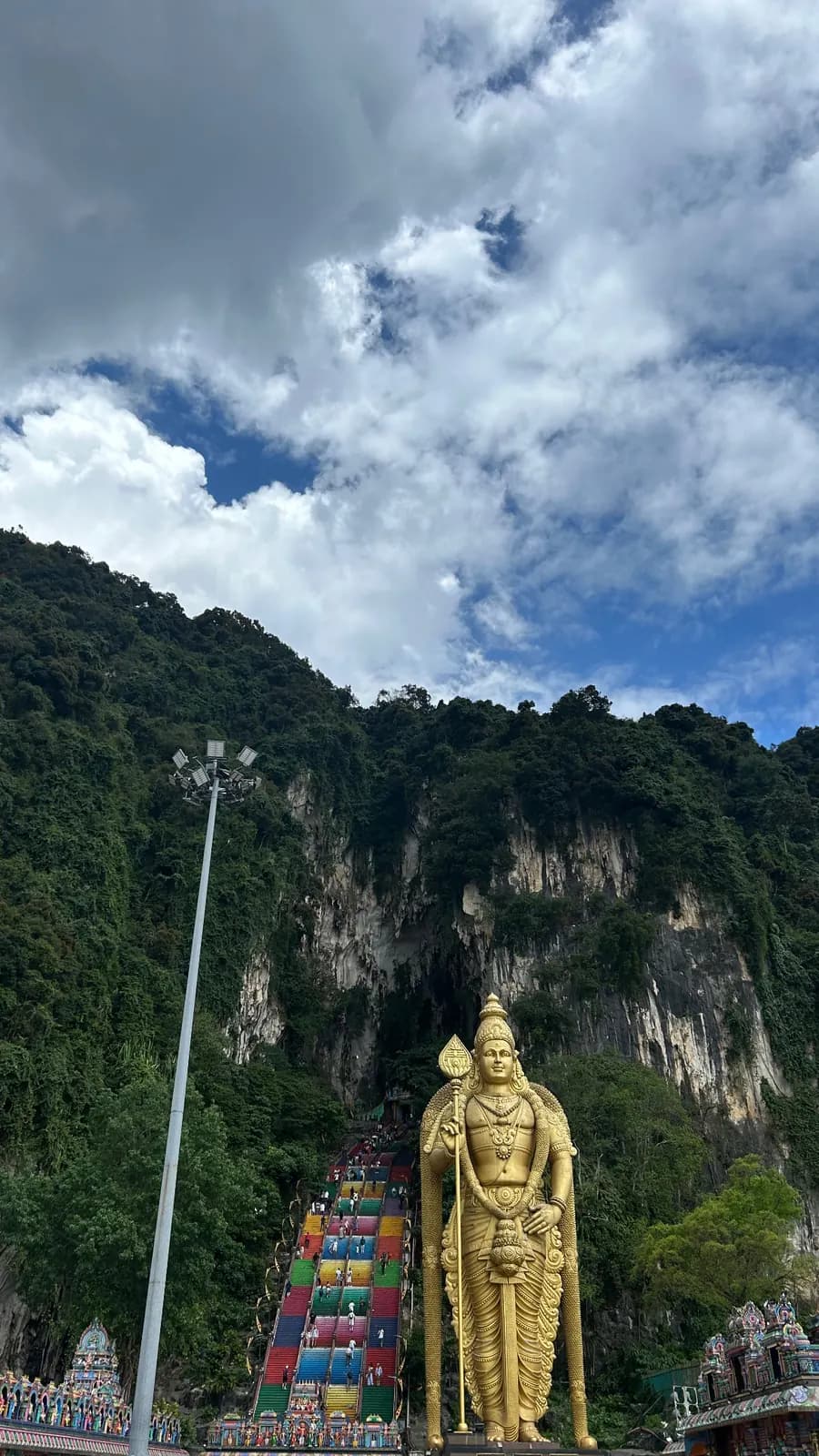
About fifteen kilometres north of the city, a Hindu shrine inside a limestone cave, reached by 272 brightly painted steps guarded by a golden statue of Murugan. Take the climb slowly: the view over the valley at the top is worth it. Macaques live on the staircase and take a keen interest in open bags.
The Islamic Arts Museum
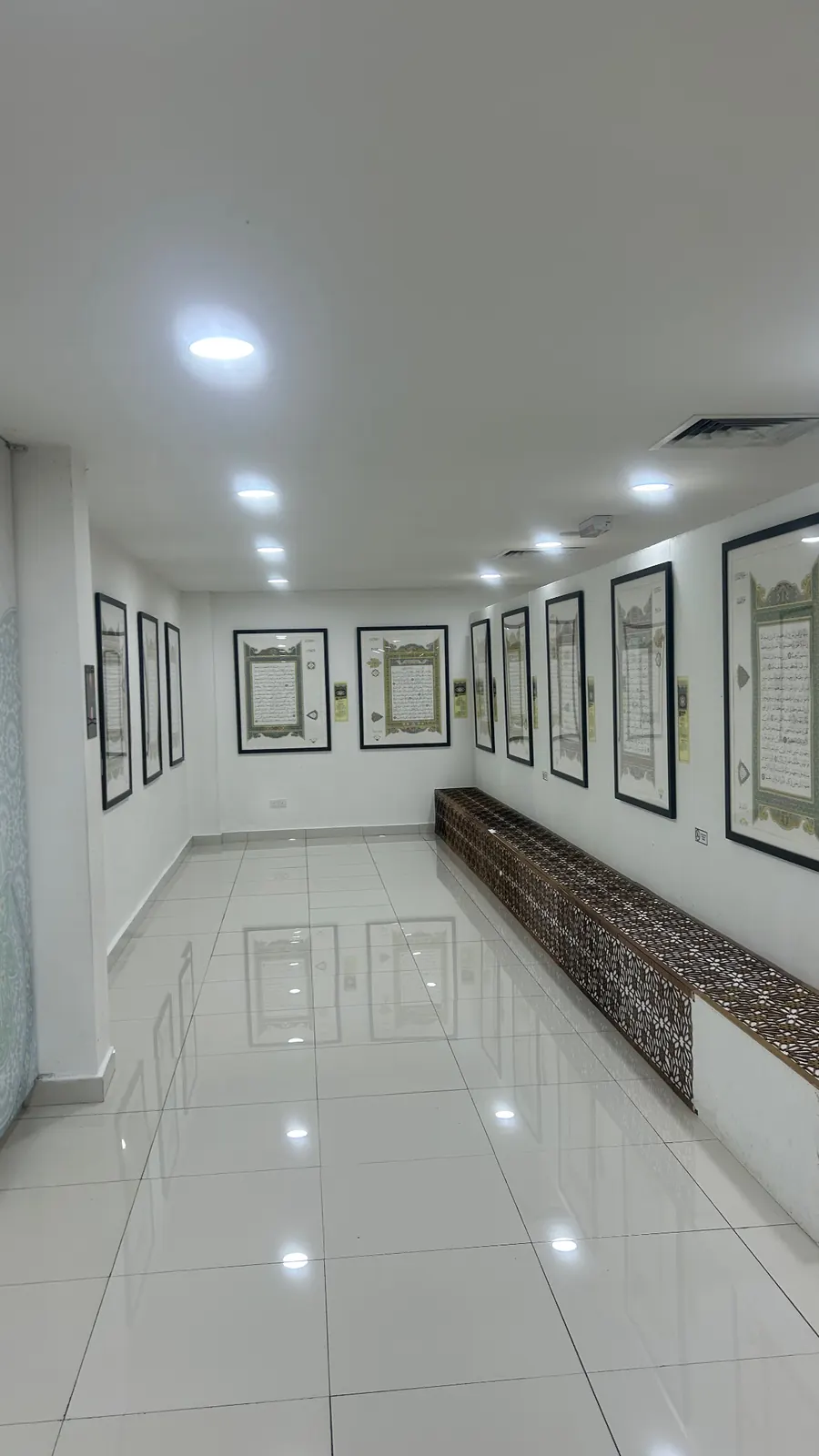
Next to the National Mosque: calligraphy, manuscripts, models of mosques from around the world, in calm, air-conditioned galleries. Two hours go by easily, and it's the stop people mention most when they get back.
A rooftop facing the Petronas, and the street at night
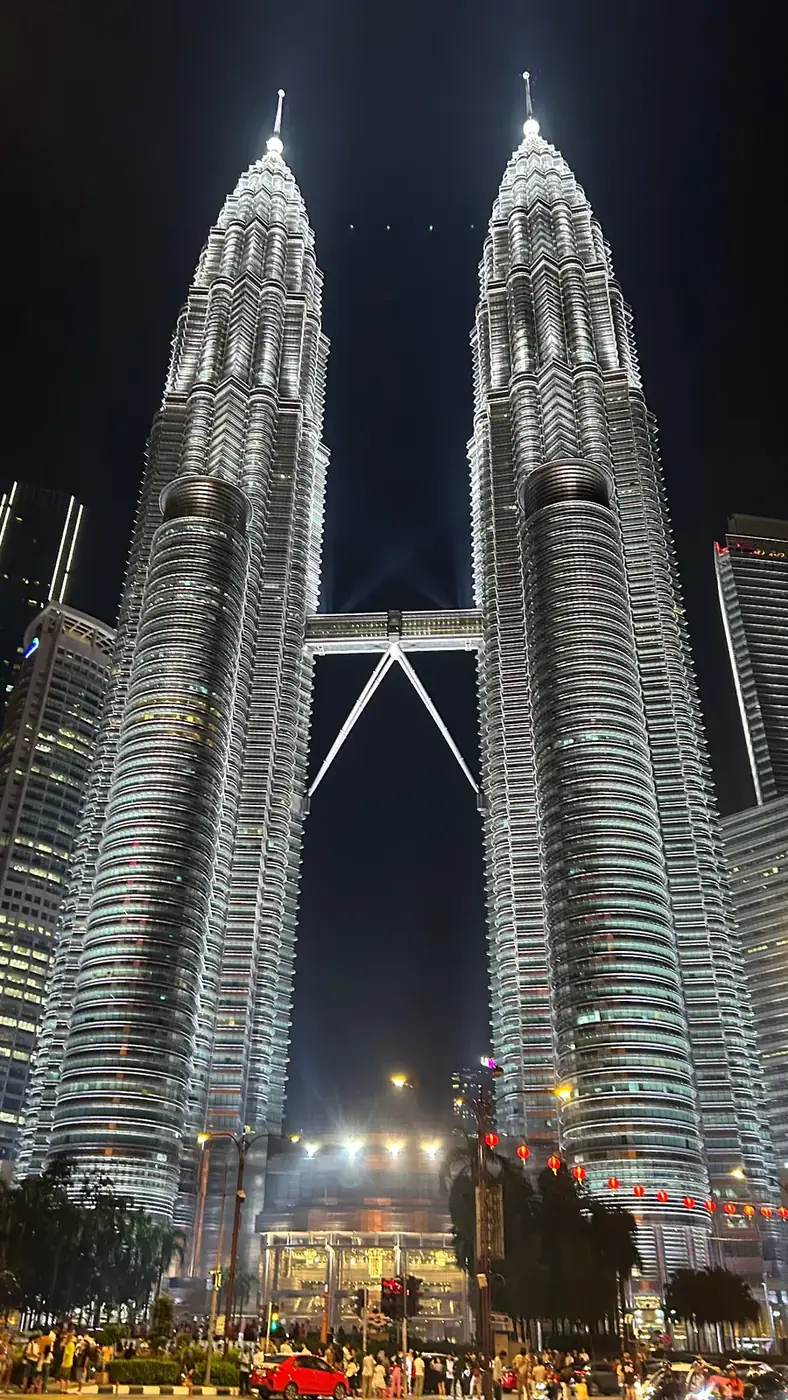
The twin towers lit up, seen from a roof, drink in hand, once the afternoon storm has washed the sky. Then night markets, noodle stalls, satay grilled on the pavement, roti canai folded by hand: Malaysian food borrows from Chinese, Indian and Malay cooking in the same street, sometimes on the same plate.
Bali
The second stop, and a complete change of scene: from a vertical capital to an island of volcanoes, terraced fields and clear water.
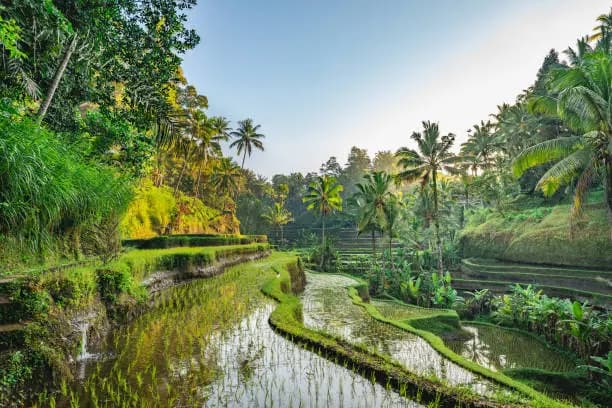
Snorkelling first, because it's what people talk about most afterwards: clear water, shoals of improbably coloured fish, coral starting a few metres from the edge. Mask and snorkel are enough, no dive certificate needed.
Then the rice terraces, cut into the hillsides and watered by a shared irrigation system the Balinese have maintained for centuries. Around them, the island's classic viewpoints: temples clinging to cliffs, valleys that open up suddenly around a bend.
The programme also includes a day at an animal park. Some people want it, others would rather swap it for a morning at sea: just tell us which when we plan the days.
And then there's the evening on the beach: the sun going down into the sea, the surfers' silhouettes on the waves, the sand still warm. It's the last image most people keep of the stop.
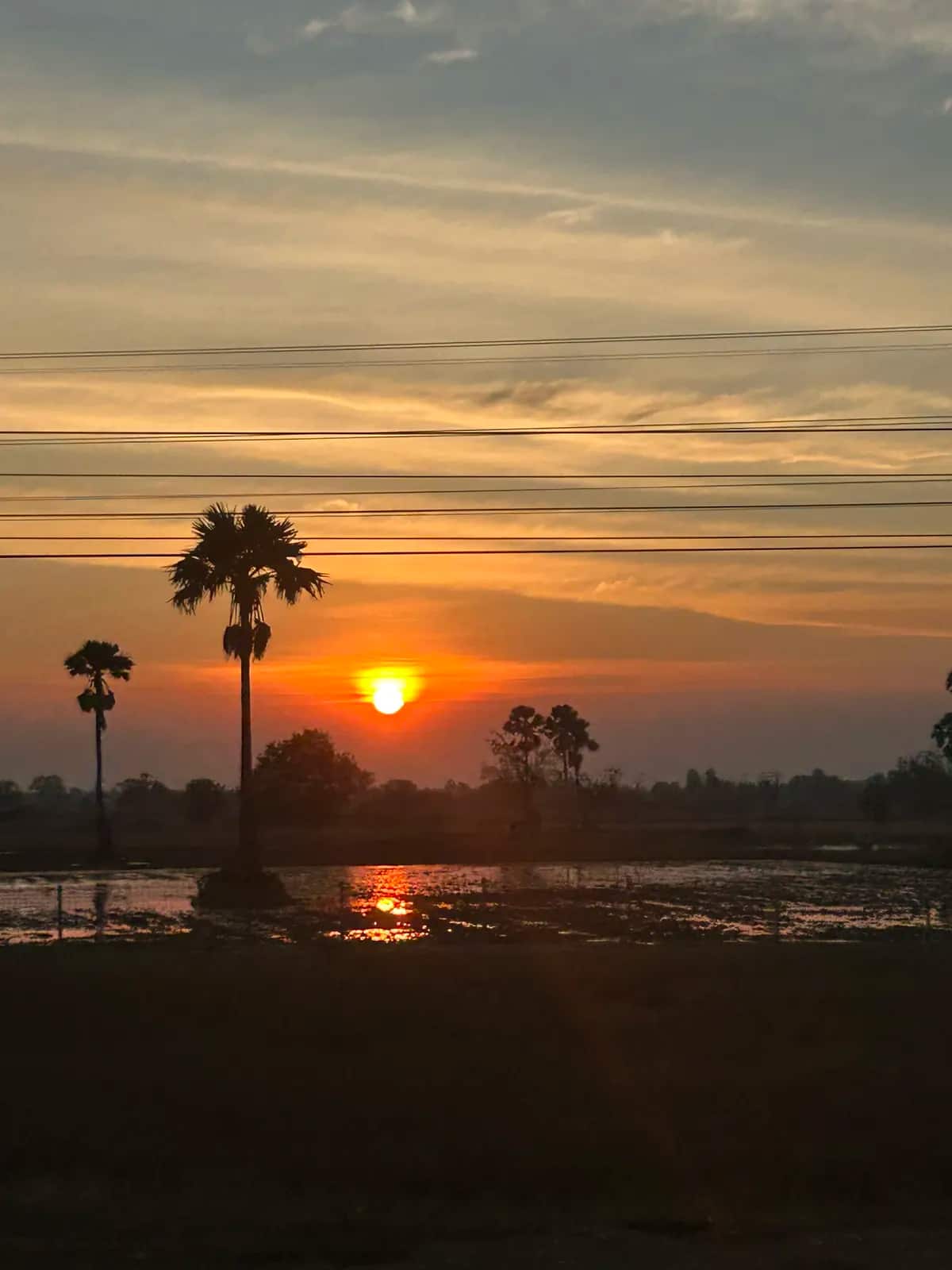
Six days, and the sun never sets twice in the same place.
Who does what
One contact from the first message to the flight back. That's what makes a three-stop route easy, and it's also why the roles need to be clear.
You send us your dates, how many of you there are and what you'd like to see. We come back with a written proposal: the order of the stops, the flights between them, the places to stay, the days planned at each stop. You read it, ask for changes, we adjust. Nothing is committed until you say yes.
Once the route is set, we coordinate: regional flights, airport transfers, breakfasts, guides and activities on the programme. During the trip you have a number that answers in English and a contact at each stop.
Now the part we'd rather state plainly than hide in small print. All To Phuket organises, coordinates and puts you in touch. Each service is provided by the local provider who delivers it, whether a host, a transport company or a guide, and you contract directly with them. We don't stand between you: we make it possible, prepare it and stay in the loop from start to finish.
Every stop on this route has been done before being suggested. The founder lives in Phuket all year and has travelled it himself, with his own luggage and his own first-timer mistakes. The partners follow the same rule: nobody joins the list without being met and tested.

Visa runs and the circuit: common questions
- What is a visa run from Phuket?
- Leaving Thailand before your permitted stay runs out and coming back in for a new one. Since 15 September 2026, visa-exempt visitors get 30 days instead of 60, so anyone staying two months now has to leave once. Many do it as a same-day hop over a border. This circuit does it as a week: Kuala Lumpur, then Bali, then back to Phuket by air.
- Is there a limit on how many times I can re-enter Thailand?
- By air, there is no annual limit on visa-exempt entries. The limit of two entries per calendar year applies only to land and sea borders. The circuit leaves and returns by air, so that limit doesn't apply to it. As with any entry, admission remains at the discretion of the immigration officer: carry proof of accommodation and of your onward flight.
- What's organised, and what stays on my side?
- We organise the flights between the stops, the accommodation, breakfasts and the activities on the programme, and you have a contact you can reach throughout. Your flight to Asia, your entry formalities, meals other than breakfast and anything you add outside the programme stay on your side. Each service is provided by the local provider, and you deal with them directly: our job is to fit it all together and stay reachable when something moves.
- Do I need a visa for Malaysia and Indonesia?
- It depends on your passport. Many nationalities, including British, American, Australian and most European passports, can visit Malaysia without a visa, but everyone fills in the free Malaysia Digital Arrival Card online in the three days before arrival. Indonesia requires a visit visa for most visitors, usually the e-VOA obtained online before you fly, plus the All Indonesia arrival form within 72 hours of landing and a local tourist levy in Bali. Your passport must be valid for six months after entry in both countries. These rules change: we confirm the current position for your passport when we set your dates.
- When is the best time for this circuit?
- There's no month when the whole route is in its dry season: Phuket is dry from December to April, Bali from May to October (April is its transition month), and Kuala Lumpur gets rain all year, mostly as afternoon showers. Late April is the best compromise. Outside it, one leg of the trip will be in its wetter season, so tell us your dates and we'll say honestly what still makes sense for your period.
All To Phuket organises, coordinates and makes introductions; each service is provided by the local provider, with whom the traveller contracts directly. Entry requirements for Thailand, Malaysia and Indonesia are set by those countries' authorities and change. Information checked on 25 and 29 September 2026.
Which dates, and how many of you?
Tell us when you're in Asia and who you're travelling with. We'll send back a written route between Phuket, Kuala Lumpur and Bali, stop by stop, to change as much as you like. Nothing is committed until you say yes.
Prefer WhatsApp? Message us directly, we reply just as fast.