 Formalities
Thailand's 30-day visa exemption
Since 15 September 2026, Thailand's visa exemption has dropped from 60 to 30 days. Extending on the spot, entry requirements, leaving the country: the full picture.
 Visa & getting around Asia
Most flights to Phuket from Europe connect in Bangkok. Plenty of travellers stop there for two or three days rather than heading straight for the beach. Here's what's really worth seeing, and how to carry on to the island afterwards.
Both orders make sense, and the choice mostly depends on the state you're in when you land from a long-haul flight.
Starting with Bangkok has a logic to it: jet lag is easier to shake off walking all day between temples and markets than lying by a pool. The city, dense and loud, naturally works as a way into the country; Phuket, slower, then comes as the reward. It's the order most first trips to Thailand follow.
Ending with Bangkok suits people who are mainly coming for the beach and keep the capital for the last stop before flying home: it becomes an active transition rather than extra tiredness at the start of the trip. This order also works well for a honeymoon or a trip built around rest, where you'd rather get over the jet lag in Phuket, in peace and quiet.
Either way, two or three nights are enough to see the essentials of Bangkok without sacrificing the beach days that follow, or come before.
Three sites hold the essentials, all grouped along the same bend of the Chao Phraya river.
The Grand Palace and Wat Phra Kaew, the Temple of the Emerald Buddha, form a single site: a historic royal residence completed at the end of the 18th century, and the most revered shrine in the country, with a two-kilometre gallery painted with scenes from the Ramayana.
Wat Pho, right next door, is the city's largest temple and home to its 45-metre reclining Buddha, covered in gold leaf.
Wat Arun, the Temple of Dawn, is visited from the opposite bank: a short boat crossing on the Chao Phraya is all it takes, and it's best photographed from the water, with its central prang covered in Chinese porcelain mosaics.
One thing to know before you go: at the Grand Palace, as in other temples, shoulders and knees must be covered, no exceptions, and it's checked by eye at the entrance. Better to bring something to cover your arms and legs than to count on renting something there.
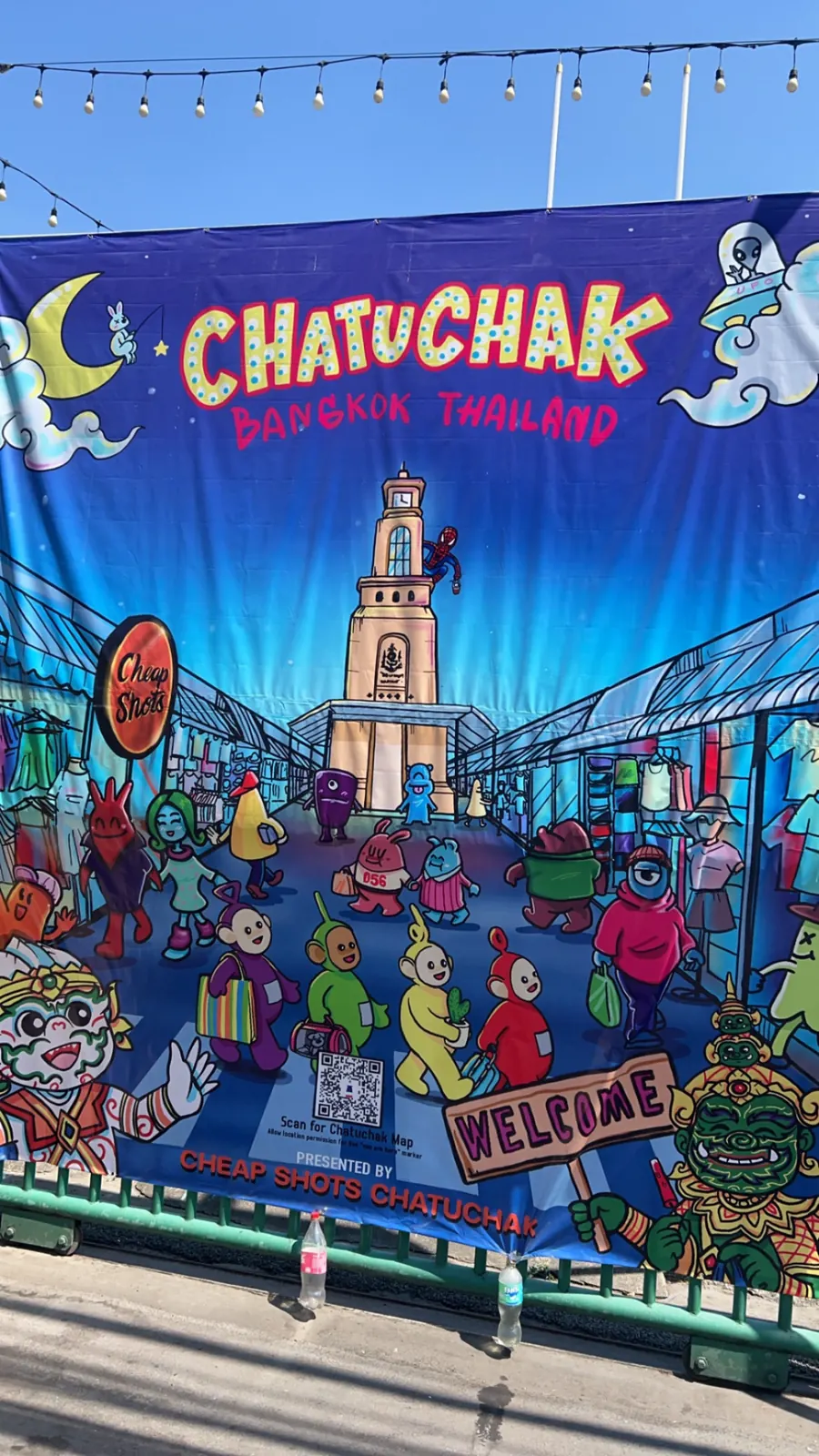
One of the biggest markets in the world, and far more than a souvenir stop.
More than 15,000 stalls over around 35 hectares, split into some thirty themed sections: clothes, crafts, antiques, plants, homeware, pets, food. More than 200,000 visitors pass through on an ordinary weekend.
The main market only really comes alive at the weekend: during the week, many shutters stay down, apart from a plant section that opens a few days midweek. If you're in Bangkok on weekdays, it isn't the priority of your stay.
Get there early, before the heat under the awnings and the density of the crowd make getting between the aisles take longer than the shopping itself. Allow a whole morning rather than an hour between two visits: the market is a maze, and getting lost is part of the experience.
Beyond the temples and the market, Bangkok reveals itself neighbourhood by neighbourhood, each with its own atmosphere.
Sukhumvit is the city's modern artery: shopping malls, international restaurants, and the Skytrain line that serves most of the hotels. In the evening, it's also where you'll find most of the capital's rooftop bars, with the skyscrapers and the river as a backdrop just as the city lights up.
Chinatown, around Yaowarat Road, is one of the oldest Chinatowns in the world and Bangkok's benchmark for street food: stalls of seafood, noodles and desserts packed into a few hundred metres, with the atmosphere stepping up another notch after dark.
Khao San Road, in the old town, has been the backpackers' haunt for decades: a few hundred metres of cheap food, late-opening bars and street stalls, a few minutes' walk from the Grand Palace. You go for the atmosphere, not the peace and quiet.
There's no fixed route for these three: the temples and Khao San Road can be walked together in the morning, Chinatown saved for dinner, and Sukhumvit to end the day up high.
A domestic flight of just over an hour, several times a day.
Bangkok has two airports serving Phuket: Suvarnabhumi (BKK), the larger one, used by most full-service airlines, and Don Mueang (DMK), further out, where many low-cost airlines fly from. Both connect to Phuket International Airport (HKT), in the north of the island.
The flight takes a little over an hour and twenty minutes, and there are plenty of departures throughout the day: several airlines, including Thai AirAsia, Thai Lion Air, Thai VietJet and Nok Air, fly the route, which gives you real flexibility on timing without booking months ahead.
On the Phuket side, we organise what comes next from the moment you land: a driver waiting at baggage reclaim rather than a taxi queue to negotiate after an early or late flight, then the villa, the scooter or the activities that follow.
FAQ
Both work. Before: jet lag is easier to shake off walking all day than lying by a pool, and the city eases you into the country before you unwind. After: Bangkok becomes an active transition at the end of the trip, which suits a honeymoon or a trip built around rest, where you'd rather get over the jet lag in Phuket itself.
Two or three nights are enough to see the essentials: the main temples in half a day, Chatuchak Market if you're there at the weekend, and a neighbourhood or two for the atmosphere. Beyond that, you're eating into beach time without seeing much more of what matters in the city.
Three sites hold the essentials and can be visited one after the other, along the same bend of the Chao Phraya river: the Grand Palace and Wat Phra Kaew, Wat Pho and its reclining Buddha, then Wat Arun on the opposite bank, a few minutes away by boat.
Ideally at the weekend: that's when the main market really comes alive, with many stalls closed during the week. Get there early, before the heat under the awnings and the crowds slow you down in the aisles.
A little over an hour and twenty minutes in the air, with plenty of flights throughout the day on several airlines. That gives you real flexibility on timing, without having to book months ahead.
Two airports serve the route: Suvarnabhumi (BKK), the larger one, used by most full-service airlines, and Don Mueang (DMK), where many low-cost airlines fly from. Both connect to Phuket International Airport (HKT), in the north of the island.
Planning your stay?
Villas, condos and apartments, directly from their owners. Send your dates and we'll get back to you with what's genuinely available.
Keep reading
More Phuket guides
FormalitiesSince 15 September 2026, Thailand's visa exemption has dropped from 60 to 30 days. Extending on the spot, entry requirements, leaving the country: the full picture.
 The islands
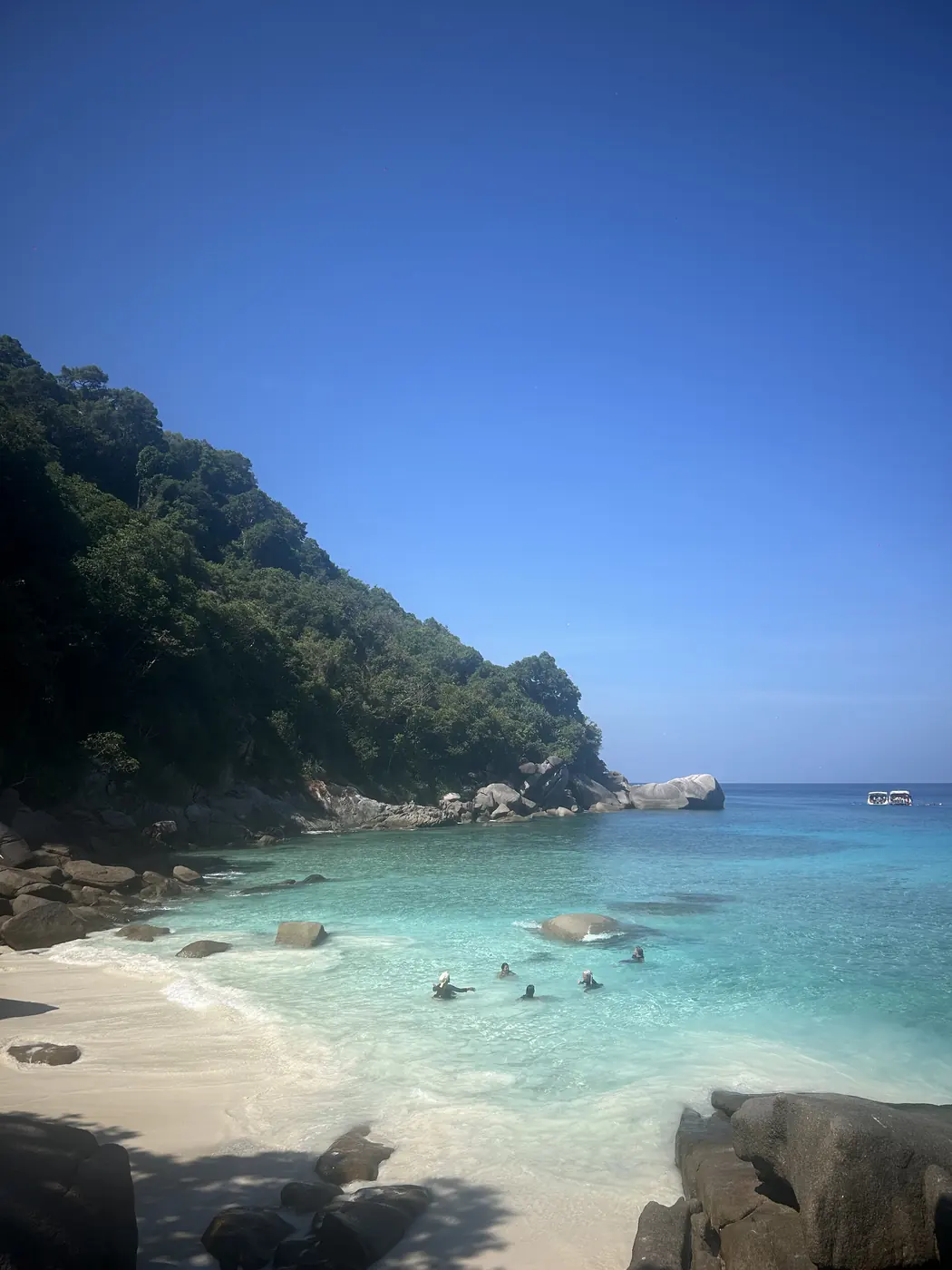
Phi Phi, Similan, Phang Nga, Racha, Coral: what each island really offers, when to go, and which one fits your trip.
 Before you go
The arrival card to fill in before you fly, airport money exchange, ATM fees, your first taxi, a scooter rented too fast: five habits for a smooth first few hours.
Tell us your flight and dates. We'll organise your arrival in Phuket and the rest of your stay.