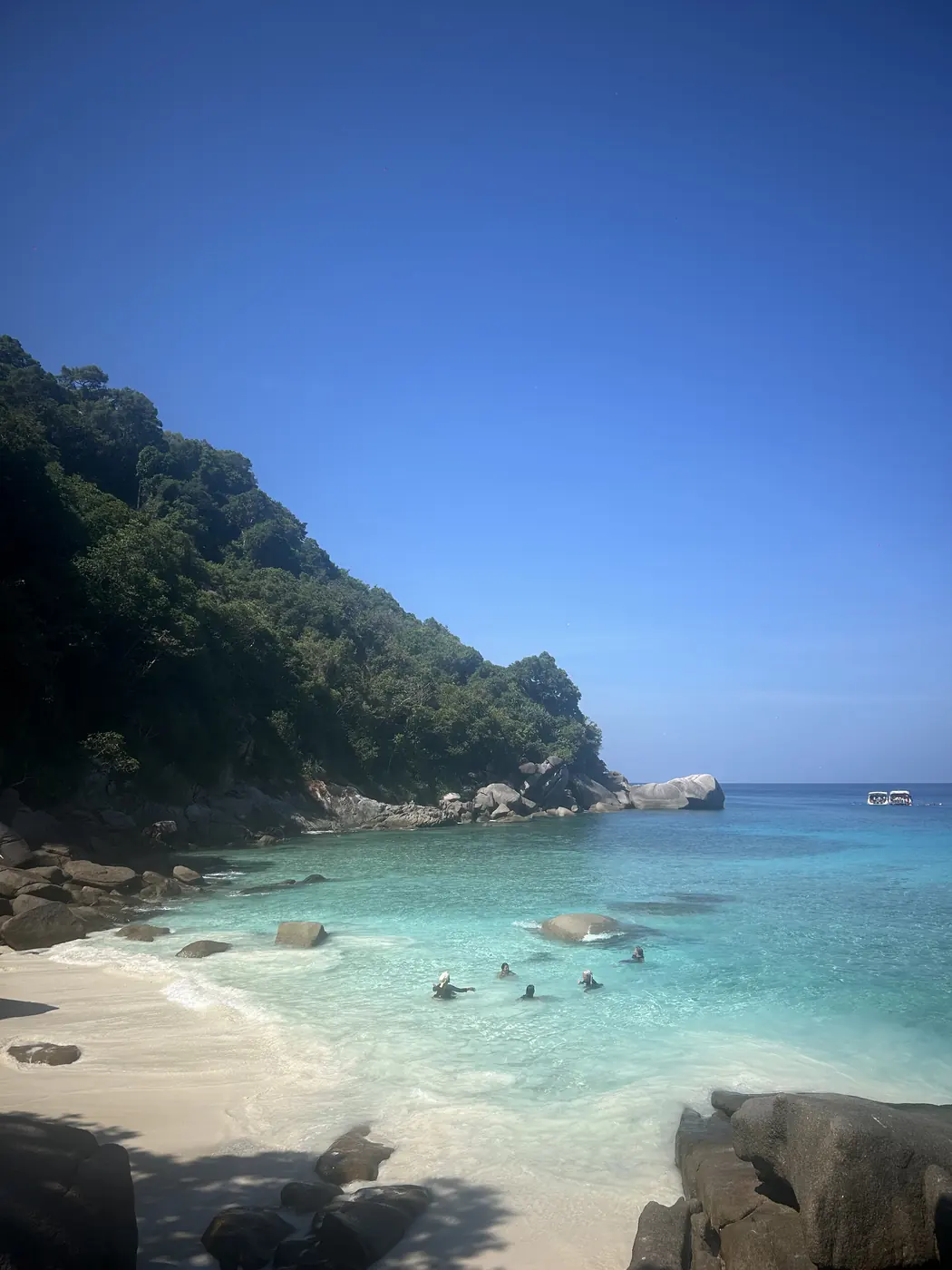
 The islands
Which island to visit from Phuket?
Phi Phi, Similan, Phang Nga, Racha, Coral: what each island really offers, when to go, and which one fits your trip.
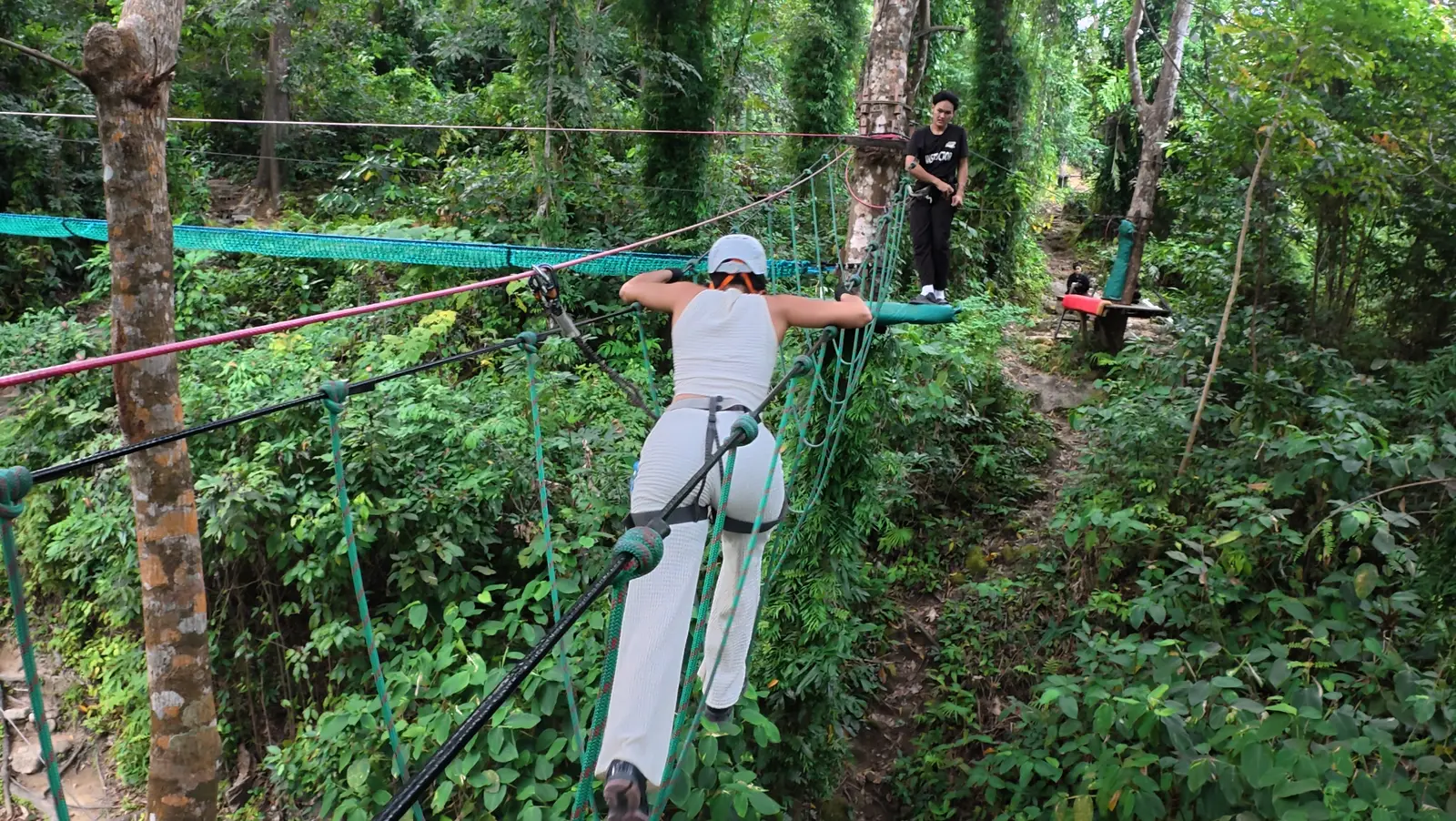 Going out & exploring
Open three guides to Phuket. You'll read about Bang Pae, often Ton Sai, sometimes Kathu. The fourth rarely makes the list: it falls above a beach on the Panwa peninsula, it's free to visit, and hardly anyone goes.
Two waterfalls in the north-east, in the Khao Phra Thaeo reserve. Two in the south, with no ticket booth and no barrier. The north is well documented, the south much less so, and that explains the whole misunderstanding.
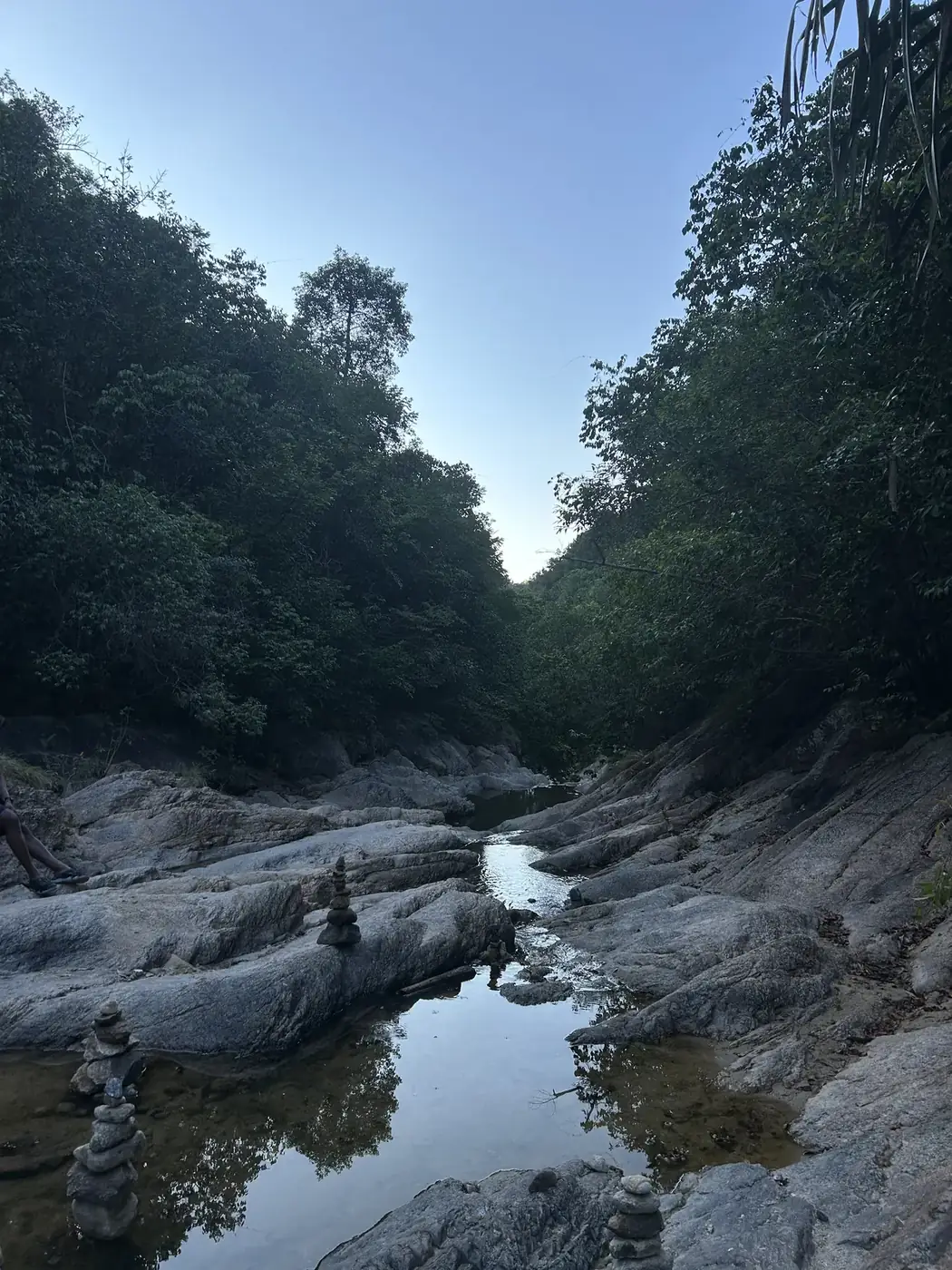
Phuket is an island of beaches, and its waterfalls live in their shadow. The forested hills of the north-east hold two of them, Bang Pae and Ton Sai, around twenty minutes apart by road and part of the same reserve. They're the ones everyone mentions, because they have an entrance, a car park and signposts.
The other two have none of that. Kathu is tucked into a small valley behind Patong; you walk in as you would down a neighbourhood path. Ao Yon hides in the slope above the bay of the same name, near Panwa, five hundred metres from the shore, marked by a sign the vegetation has almost erased. No ticket booth, so no listing, so no mention. That's how four waterfalls become three in most guides, and sometimes two.
They belong to the same reserve. The ticket you buy at the entrance of one gets you into the other on the same day, as long as you keep it on you.
It's the most useful piece of information on this page, and you'll rarely find it written down. Every week, visitors leave Bang Pae thinking Ton Sai will be a second expense, when they've already paid. Keep the ticket in your pocket, not in the car.
Bang Pae is the widest of the four and has the most water. It falls in a sheet into a natural pool you can swim in, it's a short walk from the car park, and it's the one you take people to when you only have one waterfall to show them. Ton Sai, higher up towards Thalang, plays a different tune: smaller, more intimate, backed by a patch of primary forest where the shade is dense and the air noticeably cooler than on the coast.
A forest trail links the two across the hills, for anyone who'd rather walk than get back on the road. Its condition changes with the season: ask at the entrance on the day rather than relying on a page written six months earlier.
Next to Bang Pae
A few steps from the entrance, a gibbon rehabilitation centre sits at the edge of the forest. You often hear them long before you see them: their song carries hundreds of metres and crosses the canopy in the early morning. Many visitors do both within the same hour.
The easiest to fit into an already full day. Free entry, no ticket booth, and a series of small pools you wade through.
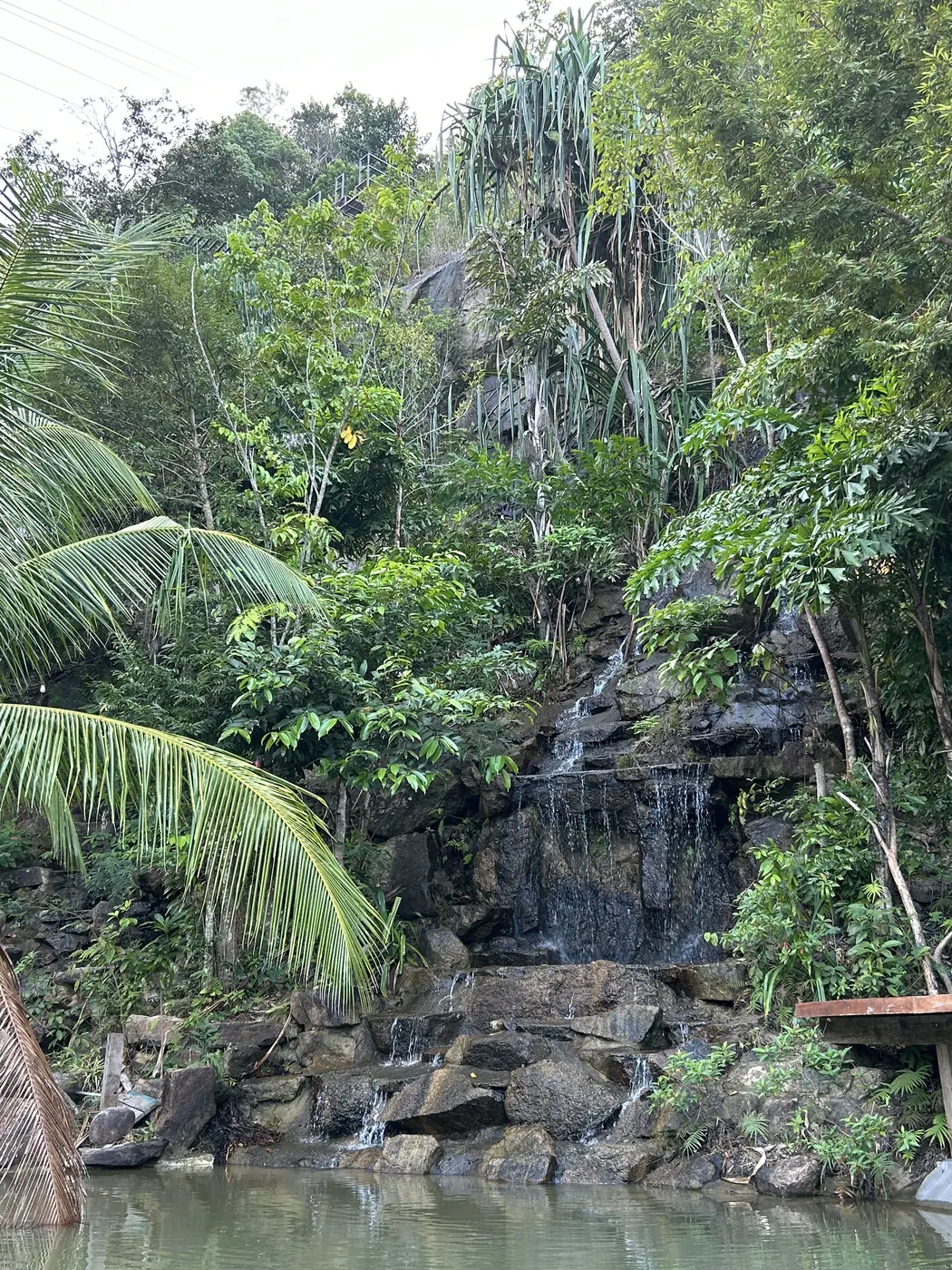
From Patong, you go over the hill and you're there. Kathu is a series of small drops, flat rocks and calf-deep pools where families settle in at weekends. Above all, it has an advantage the other three don't: it's right next to the west-coast beaches. A late morning is enough.
It's also the one most visited by people who live on the island, which changes the atmosphere: families come with food and spend the day there with no plan. If you want to know what locals do on a Sunday, this is the answer.
On the Panwa peninsula, south of Phuket Town, a two-tier waterfall drops through the jungle five hundred metres from the beach. Entry is free. Few guides mention it.
You reach it along a narrow soi off the coast road, between Ao Yon and Khao Khad. A faded sign marks the start of the path, and it's easy to miss: that's probably why the place has stayed off the radar. At the end, there's nothing. No vendors, no toilets, no proper car park. Just the trail, then the water.
That's exactly what makes it the most interesting of the four if you like arriving somewhere and finding nobody there. One tip that matters more here than anywhere else: closed shoes with grip. The rock is slippery, the mud between the stones even more so, and sandals turn the climb into a balancing act.
Panwa lends itself to a full half-day: the waterfall in the morning, Ao Yon bay afterwards, and the Khao Khad point for the view over Chalong Bay on the way back.
It's the window after the rainy season. The flow is at its peak, the pools are full, and the forest reaches a green it doesn't have at any other time of year.
If you can choose your dates and the waterfalls matter to your trip, aim for these four months. October and November are particularly beautiful: the water is strong, the light filters through a canopy heavy with moisture, and visitor numbers haven't yet reached high-season levels. One detail beats the calendar, by the way: it's the rain of the last three or four days that decides the flow, far more than the month.
The rest of the year has its own arguments, and they're completely different. The forest walk becomes the heart of the outing: the trails are dry, the rock grips, and you move along without watching every step. Under the trees, it's several degrees cooler than on the coast, the water is crystal clear, and you often have the pools to yourself. It's also the best time to bring children, because everything is easier to get around.
Either way, the best time of day is the same: early. The forest is waking up, the light is low, and you meet half as many people as at midday.
The four waterfalls aren't visited the same way. Two you can do by scooter without a second thought; two deserve a proper half-day.
Kathu is an easy scooter ride from Patong, Kata or Karon, no planning needed. For Bang Pae and Ton Sai, the road climbs and crosses the whole island: with a driver, you do both without counting the kilometres or worrying about getting back after dark.
Ao Yon is within easy reach. The Panwa road runs along the sea, it's beautiful, and the waterfall pairs naturally with the aquarium on the point or lunch by the water.
Closed shoes, water, mosquito repellent. And a light dry bag: under the canopy, a shower comes quickly and goes just as quickly.
Our partner lives on the island and gets around it all year. Tell us your dates: we'll tell you which of the four is worth the trip that week, and arrange the scooter or driver along with the rest of your stay.
FAQ
Four. Bang Pae and Ton Sai, both in the Khao Phra Thaeo reserve in the north-east of the island. Kathu, behind Patong. And Ao Yon, on the Panwa peninsula in the south. Most guides only mention two or three: Ao Yon is almost always left out.
No. Both waterfalls are in the same reserve, and the ticket bought at one gets you into the other on the same day. Just keep it on you until the second ticket booth. Allow around twenty minutes by road between the two: it makes a very comfortable half-day, and plenty of visitors leave after the first without realising they'd already paid for the second.
From September to December. It's the window after the rainy season: the flow is at its strongest, the forest is a green it isn't the rest of the year, and the pools fill up. More precisely still, it's the rain of the last few days that makes the difference, more than the month on the calendar. The rest of the year, you go for the forest walk, the cool under the trees and the calm, with rocks that are much easier to get across.
Bang Pae is the widest of the four, and its natural pool is where people get in most readily. Ton Sai and Kathu have shallow pools, better for sitting and cooling off than for swimming. Ao Yon is mostly one to look at. In every case, wet rock is slippery: closed shoes matter more than your swimsuit.
Kathu is the closest to Patong, just over the hill, and easy by scooter. Bang Pae and Ton Sai are in the north-east, around thirty kilometres from the west-coast beaches, on climbing roads: if you're doing both in one day, a car with a driver makes the day much more relaxed. Ao Yon, south of Phuket Town, is reached by the Panwa coast road.
Planning your stay?
Villas, condos and apartments, directly from their owners. Send your dates and we'll get back to you with what's genuinely available.
Keep reading
More Phuket guides
The islandsPhi Phi, Similan, Phang Nga, Racha, Coral: what each island really offers, when to go, and which one fits your trip.
 Weather & seasons
Twelve answers, including two activities that are actually at their best in the monsoon. And the tip nobody gives you: on a 50 km island, it never rains everywhere at once.
 Food
Phuket food isn't the Thai food you know: Chinese and Malay influences, and four dishes you won't find elsewhere. Where to find them, area by area.
Tell us your dates and where you're staying. We'll suggest the right waterfall for that week and arrange the scooter or driver.